Energy Efficiency
Improve the performance of existing buildings through continuous analysis of energy use and system operation. Identify inefficiencies, reduce unnecessary consumption, and lower operating costs without compromising occupant comfort.
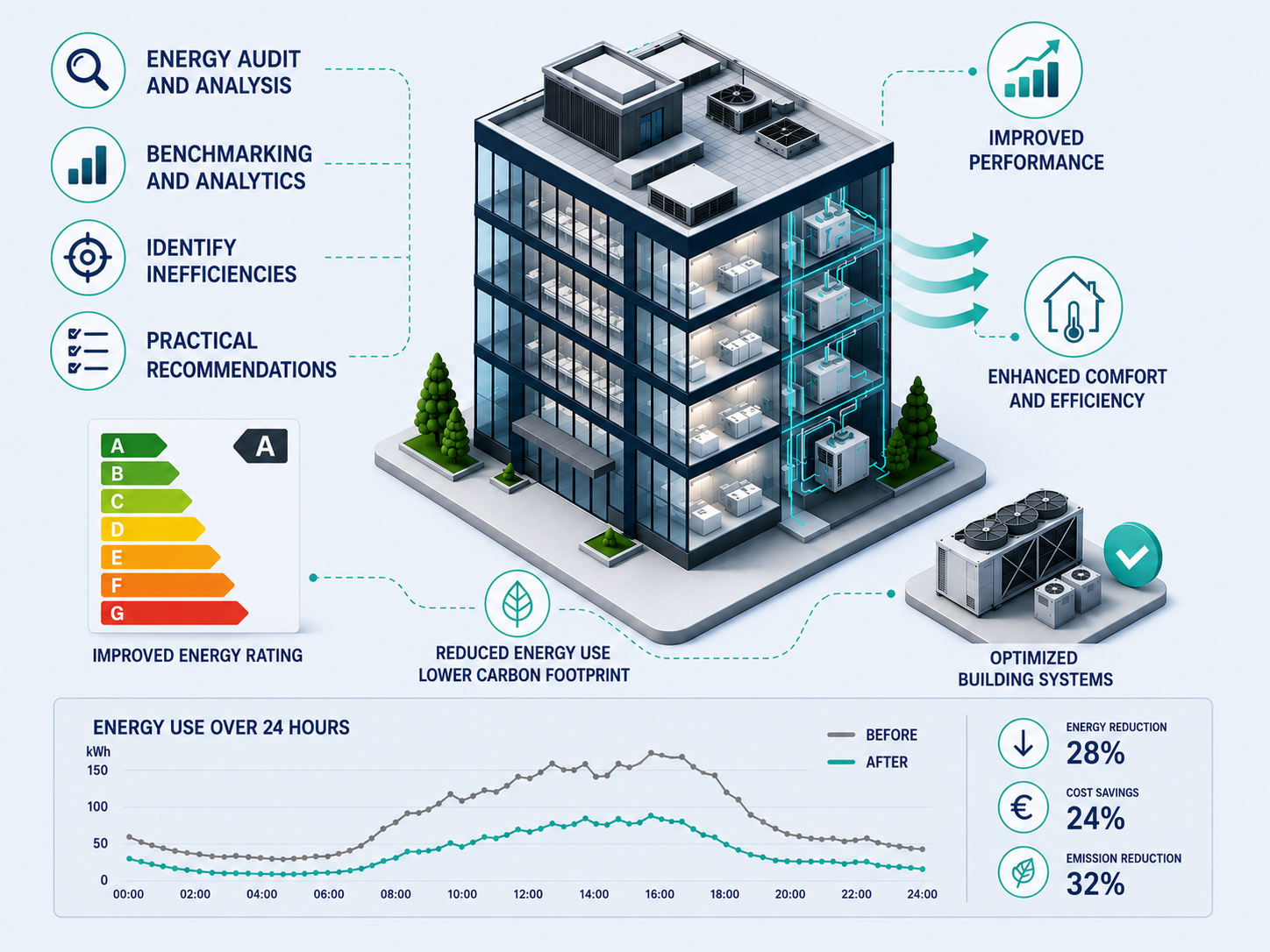

Buildings are expected to use less energy and cost less to operate while providing comfortable indoor conditions. But weather changes, energy prices fluctuate, and building needs vary throughout the day. Better performance is no longer only about efficient equipment—it is about using energy at the right time, in the right place, and where it creates the most value.
Renewable energy, batteries, electric vehicles, and connected equipment bring new opportunities, but also more systems to manage. Heating, cooling, ventilation, energy production, and storage can no longer operate in isolation. Better coordination helps reduce operating costs, avoid unnecessary energy use, and make better use of available resources while improving overall building performance and indoor comfort.
Modern energy management can use building conditions, weather forecasts, energy prices, and system performance to adapt operation as conditions change. Data-driven methods help buildings prepare for demand, use energy more efficiently, and maintain reliable operation under both everyday and unexpected conditions. This allows energy systems to move beyond fixed schedules and isolated control towards more flexible and responsive operation.
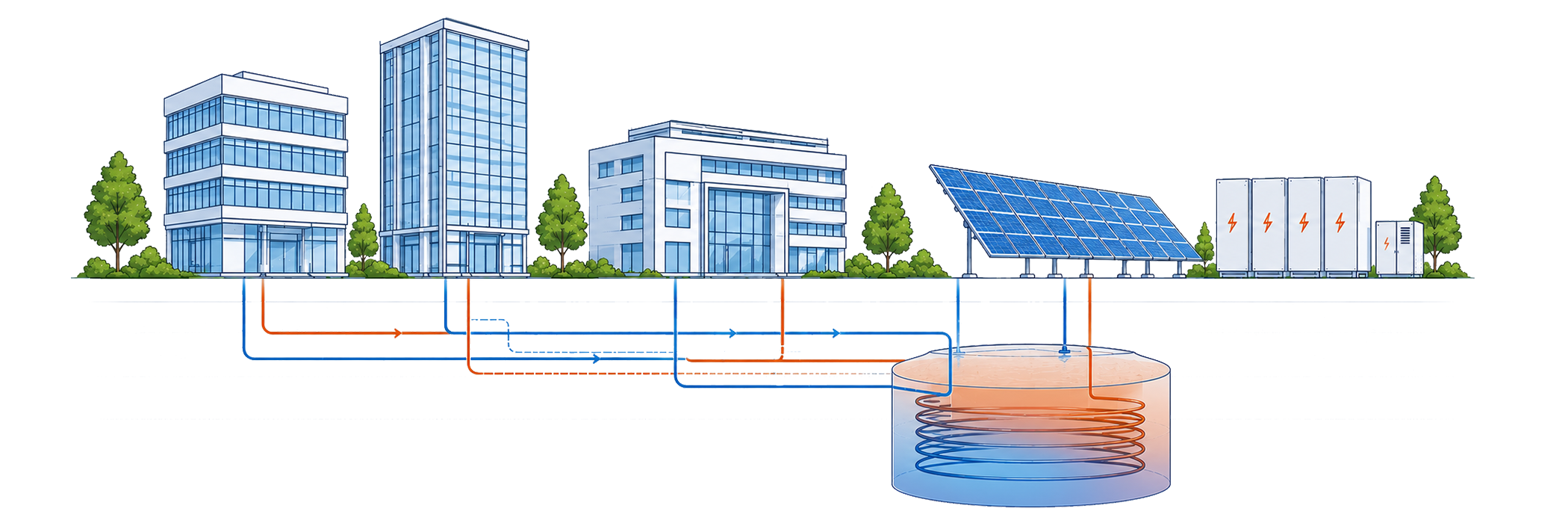
Bring different energy systems together to improve individual performance and the building as a whole.
Improve the performance of existing buildings through continuous analysis of energy use and system operation. Identify inefficiencies, reduce unnecessary consumption, and lower operating costs without compromising occupant comfort.
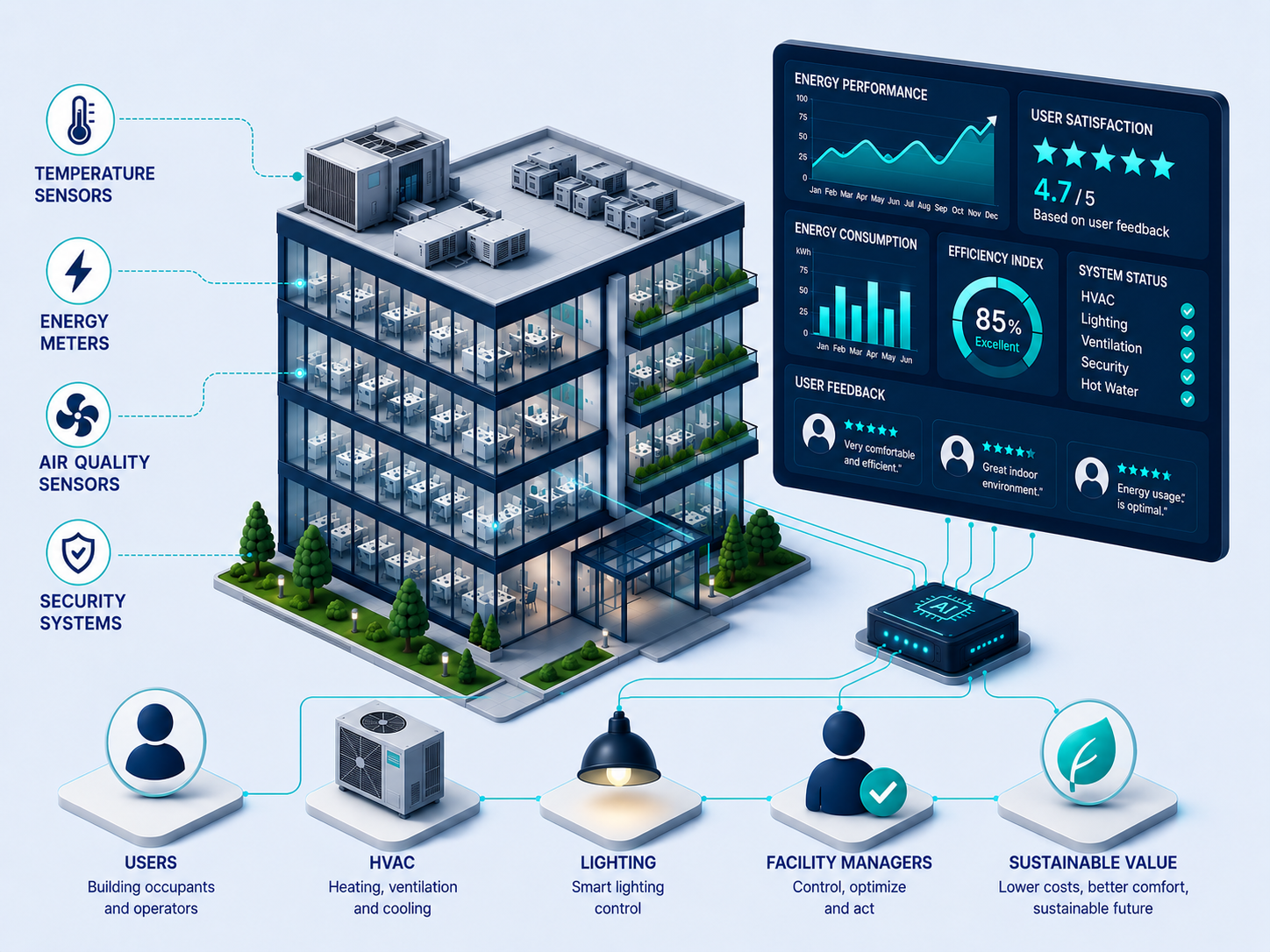
Support daily building operation with adaptive monitoring, intelligent control, and decision support. Coordinate heating, cooling, ventilation, and other building systems to improve performance under changing conditions.
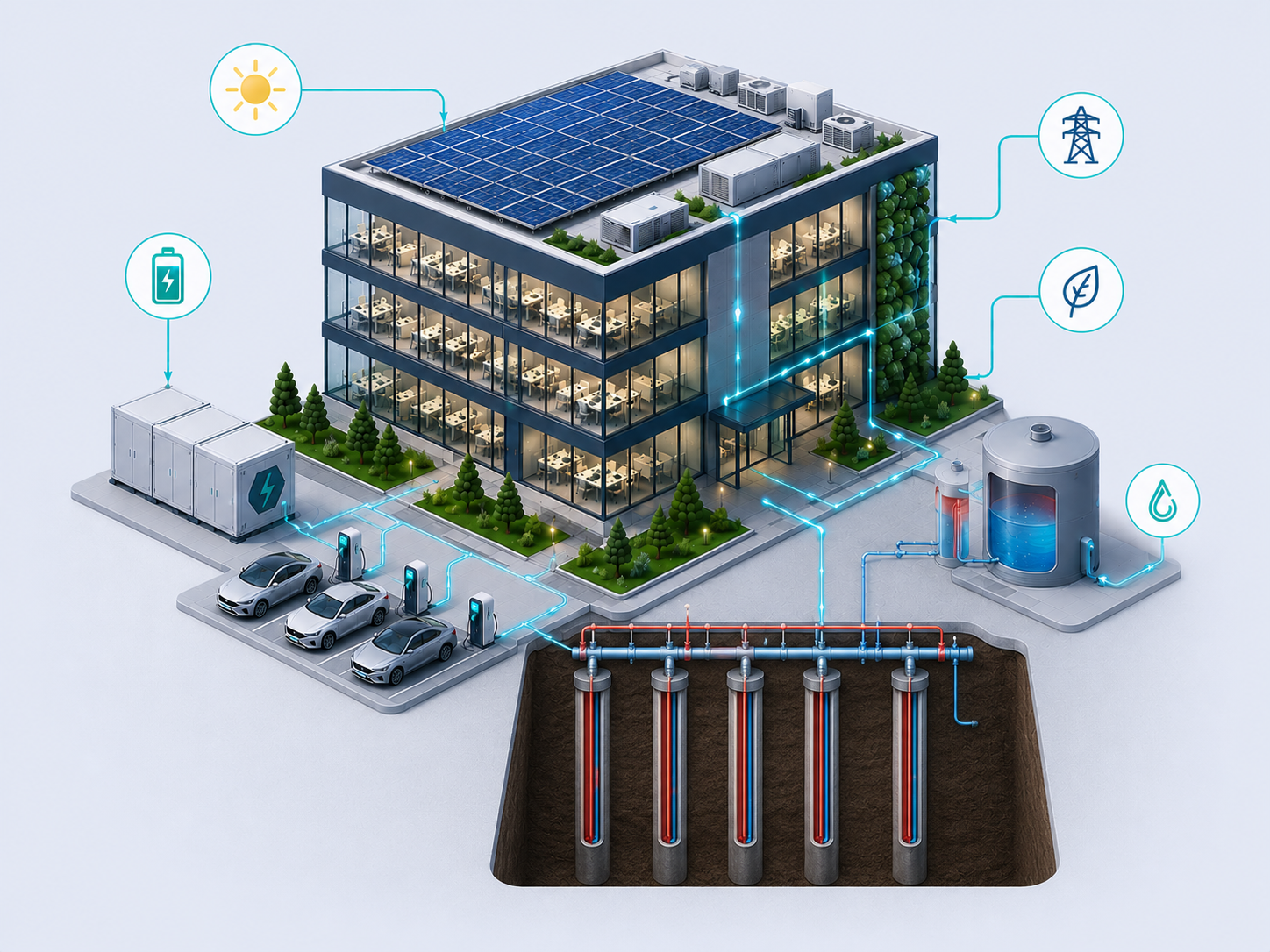
Maximize the value of local energy resources such as solar, batteries, thermal storage, and heat pumps. Balance production, storage, and consumption to increase self-use, reduce grid dependency, and improve overall energy flexibility.
Here you can test the facilities with our simulator in different scenarios. Just play around and see the performance.
DEMAND
LIMIT CAP
SHARED
SAVED
Coming soon …
Tell us about your portfolio. We will show how NeoVest can be adapted to your buildings.